I am a PhD candidate in Economics at the Paris School of Economics, under the supervision of Prof. François Fontaine. My research lies at the intersection of macroeconomics and labor economics, with a focus on firm dynamics, labor market frictions, and multi-worker wage bargaining. In Spring 2025, I was a visiting scholar at the University of Edinburgh, hosted by Prof. Mike Elsby and Prof. Axel Gottfries.
Prior to my doctoral studies, I earned an MRes in Economics from the Paris School of Economics and a B.A. (Hons.) in Economics from University of Delhi. I was previously affiliated with the India-KLEMS project at the Centre for Development Economics, Delhi School of Economics, where I worked on the production of the India Productivity Report in collaboration with the Reserve Bank of India.
WORK IN PROGRESS
The Reserve Army of Labor: Firm Dynamics, Bargaining, and Dual Labor Markets
This paper studies how firms use dual labor markets to manage productivity shocks and discipline wages. Using annual and monthly administrative plant-level data from Indian manufacturing, I document pervasive inaction in regular employment adjustment, a sharp rise in contract employment concentrated among large plants, and an erosion of the plant-size wage premium for regular workers. Motivated by these facts, I develop a tractable search-and-matching model with firm dynamics, two channels of hiring, and intra-firm bargaining. Firms face search and firing frictions in the regular labor market but rent contract workers frictionlessly through labor contractors. Contract labor serves both as a flexible input for absorbing shocks and as a bargaining device that improves the firm’s outside option. Firms consequently value contract labor beyond its contribution to production and strategically use it to shift rents away from regular workers. I estimate the model using Indian plant-level data and separate these flexibility and bargaining motives. Quantitatively, removing the wage-suppression channel reduces the contract employment share from 41 percent to just 10 percent, implying that the bargaining incentive accounts for majority of contract employment in the estimated economy.
Macro Workshop, PSE (May 2024, 2026; October 2025); Macro Reading Group, University of Edinburgh (April 2025); Labor/Public Reading Group, Sciences Po (October 2025); 20th Annual Conference on Economic Growth and Development, ISI Delhi (December 2025); 14th Warwick Economics PhD conference (May 2026); Brownbag Macro Seminar, University of Edinburgh (June 2026); III Workshop on Frontiers of Macro-Labour Economics (scheduled, December 2026)
EUR PgSE.
Unions, Hold-up, and Joint Dynamics of Labor and Capital
Transport infrastructure can raise aggregate income while leaving some locations worse off. We study this spatial distribution through a plant’s road access relative to its competitors, using India’s Golden Quadrilateral highway program. Combining plant-level data with the expansion of the network, we construct a measure of relative access weighted by competitors’ lagged value added and instrument it with an analogous straight-line measure. Plants whose relative access improves expand sales, value added, and domestic material purchases. Product-level input quantities rise, with no detectable average change in unit values. Motivated by these findings, we develop a general equilibrium model of oligopolistic competition in which plants source materials and sell final goods across districts over the same road network. We then use the model to examine how material sourcing affects plants’ relative competitiveness and the distribution of income gains across districts.
WORKING PAPERS
Investigating the Prevalence of ‘Missing Middle’ in Indian Manufacturing
with B. N. Goldar and P. Majumder
This paper re-examines the “missing middle” in Indian manufacturing using unit-level data from the NSS 73rd Round and the ASI for 2015–16, covering unorganized and organized segments, respectively. Moving beyond size-class employment shares, we adopt a Pareto-based empirical strategy to assess deviations in the firm-size distribution. The findings indicate evidence consistent with a missing middle, further supported by variations in survival probabilities across size classes.
PUBLICATIONS
The Role of Services in India’s Post-Reform Economic Growth
with B. N. Goldar and P. C. Das — Structural Change and Economic Dynamics, 2024
Leveraging industry-level data from the India KLEMS database for 1993–2018, we trace how services became India’s principal growth driver after the 1990s reforms. Over the period, the sector’s value-added share rose from 41% to 53% and real output grew 7.5 % per year — roughly half of aggregate GDP growth. We estimate total factor productivity (TFP) for 14 service industries and decompose their contributions to sector-wide TFP. Transport & storage emerges as the single largest contributor among market services, followed by financial services; in non-market activities, public administration dominates. Panel regressions reveal strong positive spillovers from manufacturing TFP to both market and non-market services, while an augmented model with foreign-sector variables confirms significant productivity diffusion from advanced economies. Taken together, the results highlight inter-sectoral and international linkages as critical channels sustaining India’s service-led growth.
Seventh World KLEMS Conference, University of Manchester (virtual)
TEACHING
Research methods in Econometrics — Masters in Economics and Psychology, PSE (2026)
Introduction to Econometrics — Masters in Economics and Psychology, PSE (2024, 2025, 2026)
International Trade — Undergraduate L3, Université Paris 1 Pantheón-Sorbonne (2024)
Macroeconomics - Growth Theory — Masters, QEM, Université Paris 1 Pantheón-Sorbonne (2023)
The repository contains JULIA code for replicating the main results of seminal models in macro-labor. These are updated as I progress through my own learning.
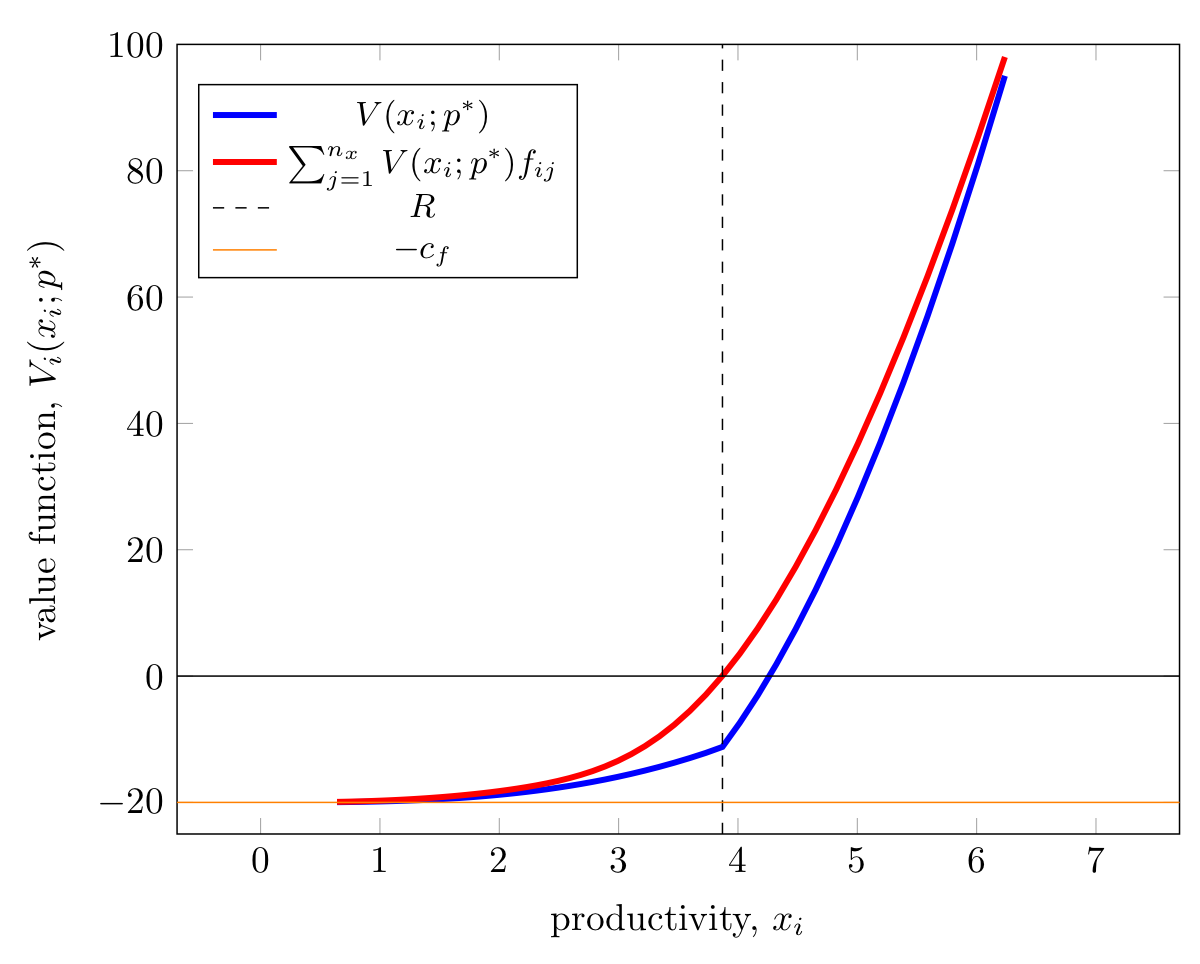
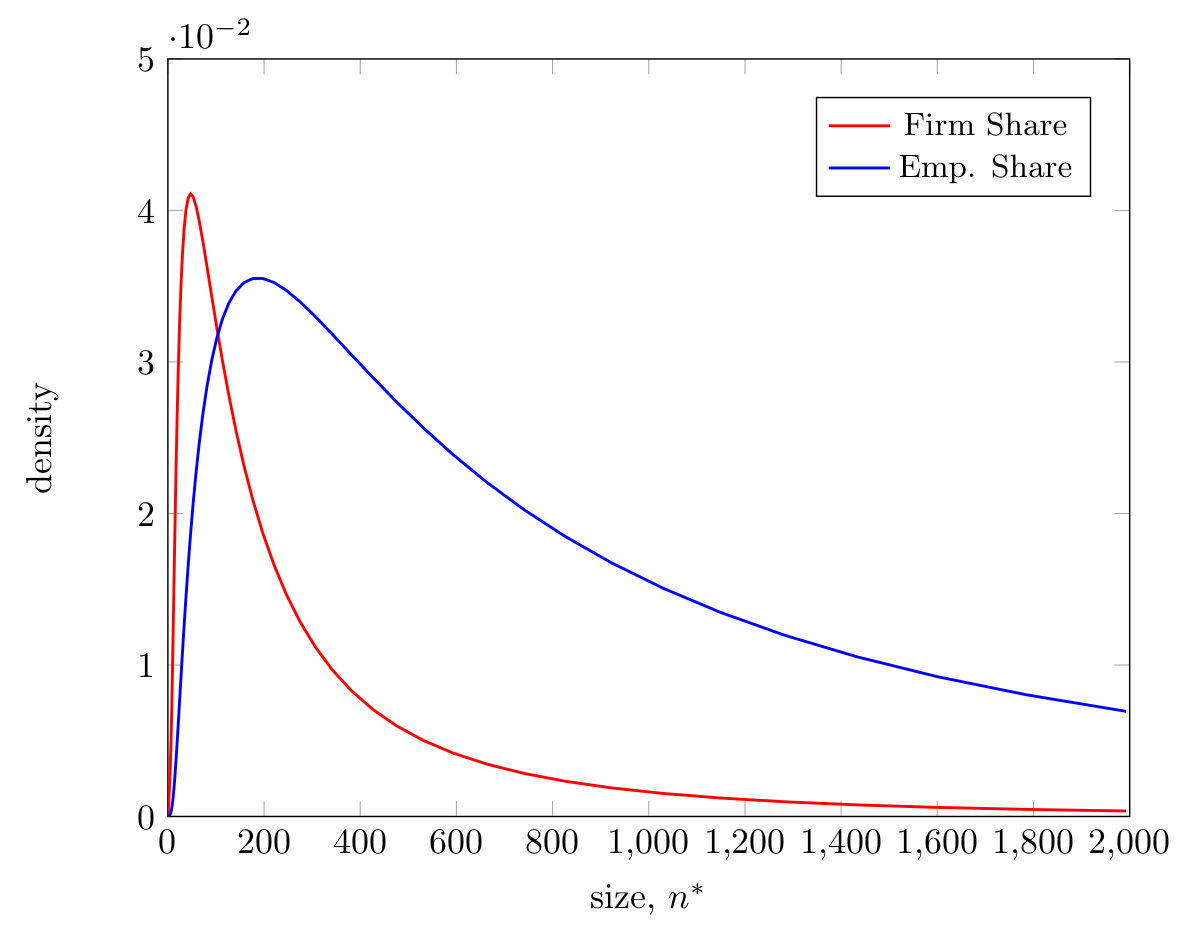
Industry equilibrium with heterogeneous firms, entry/exit, and stationary firm-size distributions. Solves for the value function, stationary distribution of firms, and equilibrium entry/exit cutoffs.
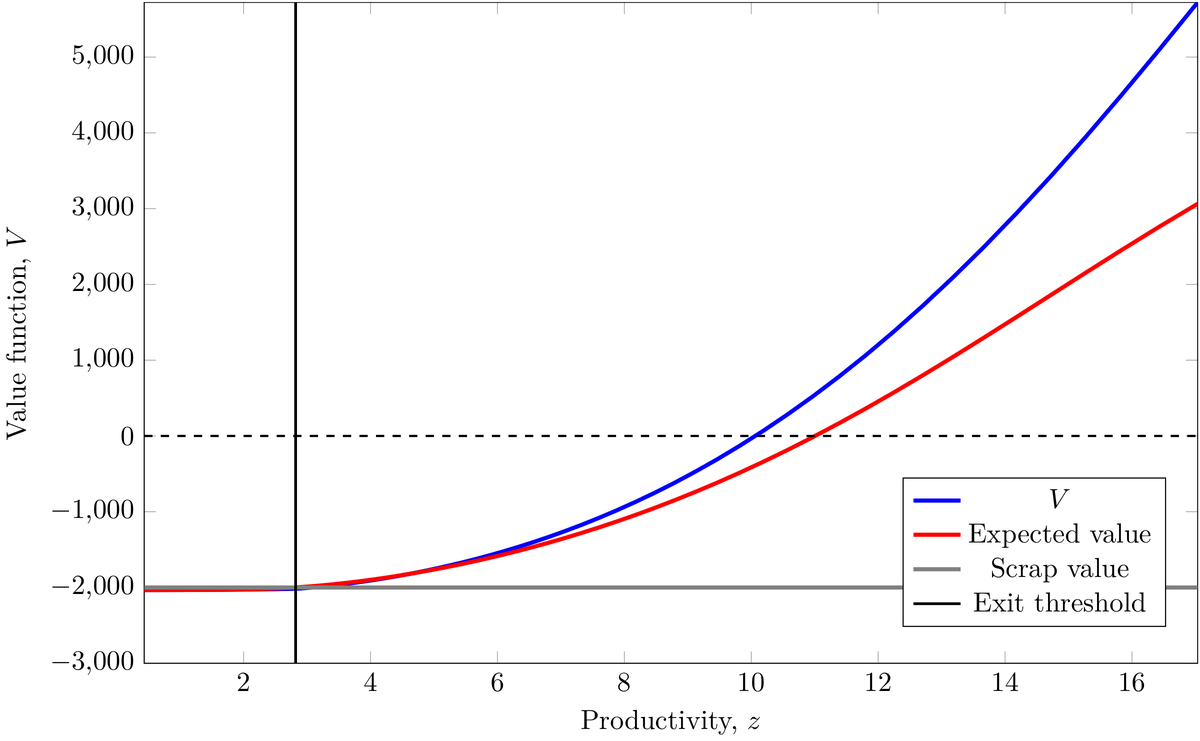
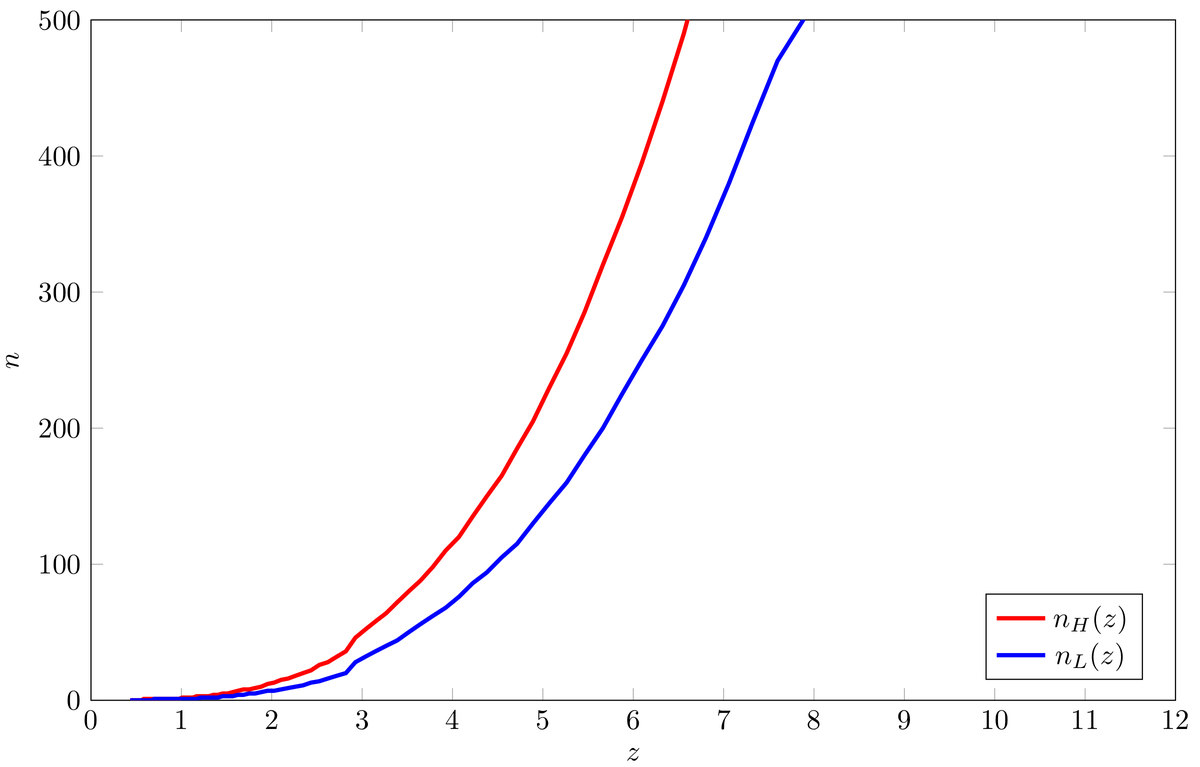
General equilibrium with firing costs and labor misallocation. Solves for the value function, stationary distribution of firms, equilibrium cutoff and inaction thresholds.
Labor market power with monopsonistic firms. Computes monopsony wedges, markdown on wages, and the aggregate output and welfare effects of market concentration.